
Paper Toss Office - Jerk Boss
PlanetFlipArcade
4.350.00 Reviews
- Version
- 3.4
- Installs
- 100.00K
- Age Rating
- Teen
Screenshots
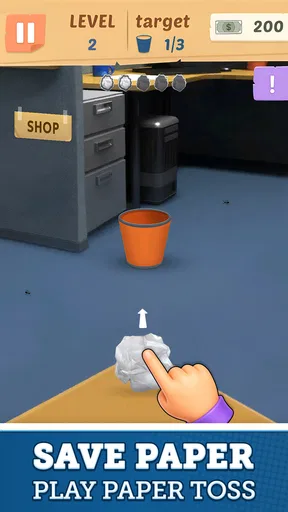
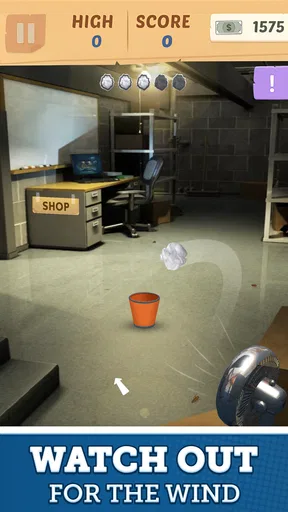
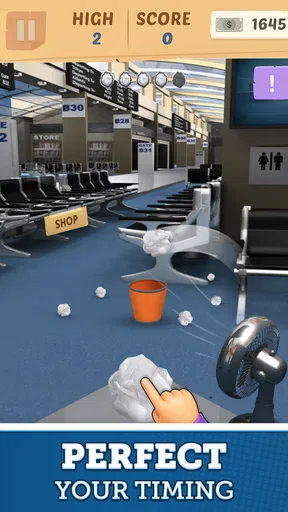
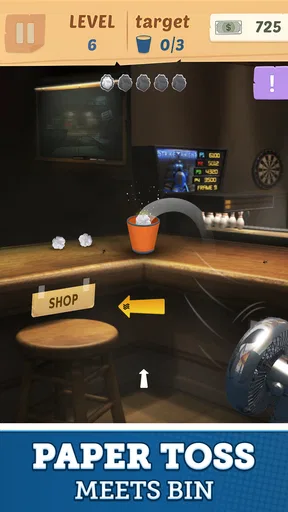
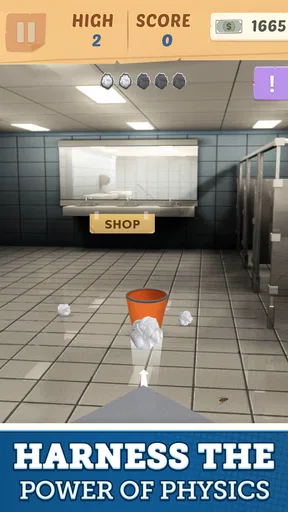
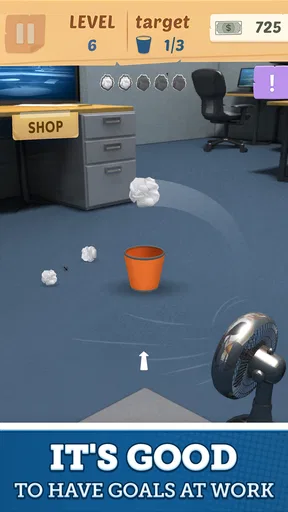
Our Review of Paper Toss Office - Jerk Boss
 Analysis by Appyee
I expected a quick time-killer from Paper Toss Office - Jerk Boss, and that is exactly what I found: a small arcade game built around throwing a crumpled sheet toward a trash can. The idea is familiar, but the appeal comes from how little effort it takes to start. There is no long tutorial to study or complicated control scheme to memorize. I can open it, take a few shots, and put it away again without feeling that I have committed to a full gaming session.
That simplicity is both its strongest quality and its biggest limitation. This is not the kind of game I would choose for a deep progression system, a story campaign, or a long evening of play. I see it more as a compact reflex-and-aim challenge for spare moments. If you enjoy trying to improve a small personal best through repeated attempts, it has a pleasant pick-up-and-play rhythm. If you need constant variety, its narrow concept may wear thin.
How the current version feels to play
The game belongs to the arcade category, and its central action is immediately understandable. I aim a paper ball at the bin, account for the situation in front of me, and release the shot. The satisfaction comes from turning an ordinary office annoyance into a tiny skill test. A successful throw feels clean because the objective is so clear; a miss is equally easy to understand, which makes me want to try once more rather than wonder what went wrong.
My favorite way to use it is in short bursts. It works well while waiting for an appointment, taking a break from reading, or sitting somewhere that only allows a few minutes of attention. A realistic example is a workday pause: instead of opening a demanding game and losing track of time, I can play several throws, notice whether my aim is improving, and close it before returning to the task at hand. That limited commitment is more important here than any large feature list.
The office setting also gives the game its personality. The idea of tossing paper toward a bin is instantly recognizable, so the controls do not need much explanation. I would not describe the presentation as a replacement for a full arcade collection, but it supports the joke and keeps the focus on the throw. The “Jerk Boss” wording suggests a workplace-flavored angle, which makes the concept feel more specific than a completely anonymous target game.
PlanetFlip is the developer behind the game, and the current release is version 3.4. That matters mainly because this is not an untouched first experiment: the product has reached a stage where the basic idea has been shaped into a maintained release. I still judge it by the quality of its short gameplay loop rather than by expecting the scope of a larger arcade title. Version information can show that the game has evolved, but it does not automatically make the core activity deeper.
It is free to start, with optional in-app purchases ranging from $0.99 to $4.99 per item. For me, that makes the initial decision easy: I can test the throwing mechanic without paying first. The important question is whether the free experience feels complete enough for casual use. Anyone who dislikes purchase prompts or prefers a completely paid-once game should pay attention to how the store experience is presented on their device before settling in.
The small decisions that make each throw matter
The obvious advice is to aim carefully, but I found that the better habit is to treat every attempt as a quick adjustment exercise. Rather than repeating the same gesture after a miss, I change one thing at a time: the starting position, the release direction, or the amount of force. This turns random tapping into a basic learning process. It is a useful approach for a game this simple because the difference between “almost there” and “completely off” can otherwise feel vague.
Another practical tip is to avoid rushing after a successful throw. A good result can make me overconfident, and the next attempt often suffers because I use the previous motion without reassessing what is on screen. I get more consistent results when I pause briefly, read the target again, and then make a deliberate gesture. That tiny reset is especially helpful during a short score-chasing session, when impatience is more likely to cause mistakes than a lack of understanding.
I also recommend using the game as a concentration break rather than treating every session as a competition. Ten careful attempts can be more satisfying than a long sequence of hurried ones. The compact loop gives me room to experiment with a repeatable routine: settle my hand, make one controlled throw, identify the error, and try again. That workflow is more rewarding than simply swiping as quickly as possible, and it gives the otherwise minimal game a little more personal depth.
There is a trade-off here. A simple throw mechanic is easy to learn, but it leaves less room for recovery when the novelty fades. In a larger arcade game, a new character, stage, obstacle, or rule might refresh the experience. Here, the motivation has to come mostly from improving execution. I think that is a fair design choice for a tiny office-themed game, but it is also why I would not recommend it as someone’s only arcade game.
What the update history means for different players
The game was released on April 29, 2024, and its current version is 3.4. I read that progression as evidence of an app that has moved beyond its initial launch state, while keeping the central paper-to-bin concept intact. The key point for a new player is that version 3.4 is the release to evaluate today, not an early snapshot. For an existing player, the version number is a reason to check the current build rather than rely entirely on an older impression.
I would be careful, however, about expecting a version number alone to signal a dramatic redesign. The confirmed identity of the game remains a simple arcade throwing experience. That means returning users should look for practical improvements in how smoothly the current build fits their routine, while new users should decide based on whether they enjoy the core action. The update path is relevant, but it does not change the basic recommendation: this is a focused time-killer, not a broad arcade platform.
Existing users may appreciate that the game is still presented as a current release rather than something abandoned immediately after launch. That can make it easier to keep installed for occasional breaks. At the same time, anyone returning after a long pause should not assume that a new version will erase the original limitations of the format. If the main reason you stopped playing was that repeated throws became monotonous, a newer build may not solve that personal objection unless the underlying loop remains enjoyable to you.
For a first-time player, the practical advantage of the current version is clarity: you can judge the game on its present behavior instead of wondering whether an old review describes an outdated build. I would install it when I want a low-pressure arcade distraction, spend enough time to see whether aiming remains satisfying, and then decide whether it deserves a permanent place on my phone. The free entry point makes that trial less risky, although optional purchases are part of the overall product.
Where it fits among familiar arcade alternatives
Compared with a racing game, this is much less demanding on time and attention. There are no long events to finish before I feel that a session counted. Compared with a platform game, it asks for less memorization and offers a more immediate relationship between gesture and result. Compared with a puzzle game, it focuses less on planning several moves ahead and more on repeating a physical-feeling action until it becomes more accurate.
Those comparisons also show when another option would be better. I would choose a larger arcade title if I wanted multiple mechanics, a stronger sense of advancement, or more varied challenges. I would choose a puzzle game if I wanted something that rewards careful reasoning instead of hand control. I would choose a competitive game if playing against other people was the main point. Paper Toss Office - Jerk Boss is better when the goal is simply to fill a spare moment with a straightforward skill check.
The game’s office theme may also appeal to people who like recognizable everyday scenarios in their casual games. Throwing paper toward a bin is more relatable than an abstract target, and that gives the action a light comic quality. Still, the theme is not enough by itself to carry a player who does not enjoy repetition. I see it as a useful wrapper around the mechanic, not as a substitute for content variety.
The audience data suggests that the game has reached a meaningful casual audience, with over 100 thousand installs and a 4.3 average from around 1.4 thousand ratings. I mention that because it fits the game’s accessible design: people can understand the objective quickly and decide for themselves whether the loop is satisfying. Those figures do not guarantee that every player will enjoy the same pace, but they do indicate that the concept is easy for a broad group to try.
Who should try it, and who should skip it
I recommend it to people who like short arcade sessions, simple touch controls, and the small satisfaction of improving a repeated action. It is particularly suitable for players who do not want to learn a complicated system before having fun. It can also work for someone looking for a harmless break from work or study, provided they are comfortable with a game that may be finished emotionally in a few minutes even if they keep returning to it.
I would skip it if you need a substantial campaign, a rich narrative, or a steady stream of new mechanics. It is also not my first choice for someone who becomes frustrated by repeated micro-adjustments. The central challenge is intentionally narrow, so the game cannot hide that limitation behind exploration or a large collection of modes. Players who prefer games with a clear long-term destination may find the experience too modest.
The content rating is Teen, so families should check whether that rating fits the intended player rather than assuming that a paper-throwing premise automatically makes it suitable for every age. The game itself sounds light in concept, but the rating is the practical reference point to use when deciding whether to install it on a shared device or recommend it to a younger player.
It requires Android 7.1 or later, which gives it a relatively broad compatibility range for Android users with older supported devices. I would still judge the experience on the phone or tablet where I plan to play, because a simple game is most enjoyable when the controls feel responsive and the screen is comfortable to use. The minimum operating-system requirement makes it accessible to more devices, but it does not remove the importance of personal comfort during repeated aiming.
What still feels limited in the present experience
The largest gap is depth. The paper-and-bin idea is instantly charming, but its long-term appeal depends heavily on the player’s willingness to chase better throws. Once the basic gesture becomes familiar, the game needs to earn continued attention through precision, atmosphere, or variation. For me, it succeeds as a short diversion more convincingly than as a main game.
There is also a natural risk of repetition. A player can understand the entire premise almost immediately, which is excellent for accessibility but leaves little mystery. I would not install it expecting a discovery-driven experience. Its value comes from the repeated attempt itself, much like practicing a small physical skill. If that kind of loop is not enjoyable, no amount of familiarity with the office theme will make it feel substantial.
The free-to-play structure is another point to consider. The price of entry is free, while optional purchases are available from $0.99 to $4.99 per item. That arrangement is convenient for sampling, but players who want a distraction without any commercial friction may prefer a title with a single upfront purchase or no purchase layer at all. I would make sure the person using the device understands that optional spending exists, especially on a shared phone.
The rating and review count offer useful context but not a personal guarantee. The game has around 50 written reviews and an overall average of 4.3, which gives prospective players some outside perspective. I still think the best test is a short hands-on session: does the throw feel satisfying, and do misses make you want to adjust rather than quit? Those two reactions tell me more about fit than a score alone.
What I would watch as the game continues
For future builds, I would be most interested in whether PlanetFlip can preserve the instant accessibility while giving returning players a stronger reason to come back. The ideal direction would not be to make the game complicated for its own sake. It would be to add meaningful freshness around the throw without losing the quick office-break identity that makes the game approachable.
I would also watch how the current version affects long-time users in practice. If returning players feel that their familiar routine remains smooth, version 3.4 will have done its job as a dependable casual release. If they are looking for a more substantial reason to return, the next stage would need to address the repetition problem rather than merely keeping the same first impression polished.
My advice is simple: treat this as a focused arcade toy, not as a promise of endless content. Try it when you want a free, low-commitment way to practice aim and reset your attention. Use controlled throws instead of frantic swipes, and decide after a few short sessions whether the repetition feels satisfying. That approach gives the game a fair chance without pretending it offers more depth than it does.
Overall, I find Paper Toss Office - Jerk Boss easy to recommend to the right person. It is approachable, quick, and specific enough to have a little character, while its free entry makes experimentation straightforward. I would keep it installed for brief breaks, but I would pair it with a deeper arcade game if I wanted a richer long-term hobby. Its real strength is the clean, immediate loop; its real weakness is that the same simplicity can limit how long the loop remains fresh.
Verdict
Strengths of Paper Toss Office - Jerk Boss
- Simple one-touch controls are easy to learn.
- Short rounds make it ideal for quick breaks.
- Humorous office setting gives the game personality.
- Works well for casual, low-commitment play.
- Trash-can targets provide clear visual feedback.
Limitations of Paper Toss Office - Jerk Boss
- Gameplay can become repetitive after extended sessions.
- Precision may feel inconsistent on smaller screens.
- Limited depth may not satisfy serious gamers.
- Some levels can feel more frustrating than challenging.
- The office theme may not appeal to every player.
Similar Picks in This Category
View All
Subway Surfers
SYBO Games4.6

Stickman Party 234 MiniGames
PlayMax Game Studio4.6

Subway Princess Runner
Ivy4.4

Temple Run
Imangi Studios4.2

Zombie Tsunami
Mobigame SAS4.6

Stack Ball - Crash Platforms
CASUAL AZUR GAMES4.5
Frequently Asked Questions
What is Paper Toss Office - Jerk Boss?
Paper Toss Office - Jerk Boss is a casual physics game set in a humorous office environment. Your objective is to flick crumpled paper into a wastebasket while dealing with obstacles such as desks, furniture, fans, and other workplace distractions. The game is designed for short sessions, with simple controls that are easy to understand but increasingly difficult to master as the distance and environmental challenges change.
How do you play Paper Toss Office - Jerk Boss?
Gameplay is based on a swiping gesture. You drag and flick the virtual paper toward the bin, adjusting the direction and strength of each throw. The office fan and surrounding objects can affect the paper’s path, so successful shots require timing and careful observation. The controls are straightforward, but consistently landing accurate throws takes practice, especially on longer-distance levels.
Is Paper Toss Office - Jerk Boss free to download?
The game is generally offered as a free download, although availability and pricing can vary depending on whether you use Android or iOS and which regional store you access. Free versions may include advertising or optional in-app features. Before installing, check the official store listing for the current price, supported devices, permissions, advertisements, and any available purchase information.
Can Paper Toss Office - Jerk Boss be played offline?
The core throwing gameplay is typically suitable for offline play, which makes it convenient for quick entertainment while traveling or when you do not have an internet connection. However, certain functions—such as advertisements, store content, analytics, updates, or leaderboard synchronization—may require connectivity. For the most reliable information, review the latest store description and test the game after temporarily disabling your connection.
Is Paper Toss Office - Jerk Boss suitable for children?
Paper Toss Office - Jerk Boss uses simple cartoon-style gameplay and does not depend on complex controls, making it accessible to many younger players. Nevertheless, parents should check the age rating, advertising policy, and possible in-app purchases before allowing children to play. The office humor and the game’s frustration-based challenge are generally mild, but store ratings can differ by platform and region.
Play our best games!


